



- Our picks for the best credit cards for international travel
- How we picked the best international credit cards
- Sources
- Beginner’s guide to international credit cards
- About the author
- User questions & answers
- Expert opinions
Our Picks for the Best Credit Cards for International Travel
In general, the best credit cards for international travel work all around the globe, in hundreds of countries and territories, offering really good rewards without charging international fees (unlike more than 90% of cards). Many also have a feature called chip and PIN for easier use and added security abroad. Plus, the best credit card for international travel can save you as much as 8% on currency conversion alone.
Best Credit Cards for International Travel Compared
| Credit Card | Best For | Annual Fee |
| Chase Sapphire Preferred® Card | Overall | $95 |
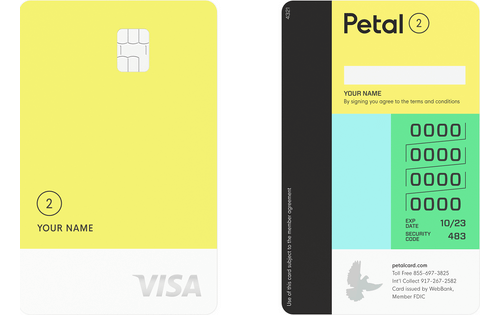
| Petal® 2 Visa® Credit Card | Limited/Average Credit | $0 |
| U.S. Bank Altitude® Connect Visa Signature® Card | Excellent Credit | $0 intro 1st yr, $95 after |
| U.S. Bank Business Altitude™ Connect World Elite Mastercard® | Business | $0 intro 1st yr, $95 after |
| Capital One Venture Rewards Credit Card (see Rates & Fees) | Travel Rewards | $95 |
| Bank of America® Premium Rewards® credit card | Initial Bonus | $95 |
| U.S. Bank Altitude Reserve Visa Infinite® Card | Best Value | $400 |
How We Picked the Best International Credit Cards
To identify the best international credit cards, WalletHub’s editors compare major credit card offers based on how well their rewards, fees and other WalletHub Rating components suit the needs of international travelers. More specifically, WalletHub analyzes the foreign travel benefits offered by personal credit cards from the top 10 issuers, excluding student and co-branded cards.
In addition to the top cards overall, we select the best secured card and the best card for business to make sure different types of travelers' needs are met.
How Two-Year Cost Is Calculated
Two-year cost is used to approximate the monetary value of cards for better comparison and is calculated by combining annual and monthly membership fees over two years, adding any one-time fees or other fees (like balance transfer fees), adding any interest costs, and subtracting rewards. Negative amounts indicate savings. When fees or other terms are presented as a range, we use the midpoint for scoring purposes. Rewards bonuses and credits have been taken into account for two-year cost calculations. However, bonuses applicable to only a very small portion of cardholders are not considered. For example, credits and bonuses awarded for spending or redeeming rewards through a company portal with non-co-branded cards have not been taken into account. Similarly, bonuses and credits related to spending with specific merchants using a non-co-branded card have not been taken into account (for example, if Card A offers credits with DoorDash, this feature would not be factored into calculations because it is hard to assess how many cardholders would use the benefit or exactly how much value they'd get from it).
Cardholder Spending Profiles
Given that different users have different goals and are likely to use their credit cards differently, we identified spending profiles that are representative of different users’ financial priorities and behaviors. For each cardholder type, we have assumed a specific amount of monthly spending by purchase type (e.g., groceries, gas, etc.), as well as an average balance, balance transfer amount, amount spent on large purchases and average monthly payment. Spending assumptions are based on Bureau of Labor Statistics data for consumers and PEX data for businesses.
For more details, view the full methodology from our International Credit Card Study.
Sources
WalletHub actively maintains a database of 1,500+ credit card offers, from which we select the best international credit cards for different applicants as well as derive market-wide takeaways and trends. The underlying data is compiled from credit card company websites or provided directly by the credit card issuers. We also leverage data from the Bureau of Labor Statistics to develop cardholder profiles, used to estimate cards’ potential savings.
Beginner’s Guide to International Credit Cards
Is a Credit Card or a Debit Card Better for International Travel?
A credit card is better for international travel than a debit card because credit cards offer far superior rewards and better fraud protections. The right travel rewards credit card can save you $500 to $1,000+ on a single international trip, whereas debit cards with rewards are quite rare. Plus, when someone makes fraudulent purchases with your debit card, you lose money and have to get it back. With a credit card, you have the opportunity to notice and dispute the fraud before paying the bill.
Although a credit card is a better choice as your main payment method internationally, you should still bring a debit card with you when you travel abroad. You won’t be able to pay for everything with a card, so an inexpensive way to access cash will come in handy.
Learn more about using credit and debit cards for international travel.
Pros and Cons of International Credit Cards
| Pros | Cons |
| No foreign transaction fees | Annual fees |
| Travel rewards | High interest rates |
| Widespread acceptance | Rewards may expire |
| Low currency conversion rates | Points/miles could be devalued |
| Chip-and-PIN | Redemption roadblocks in some cases |
| Travel insurance | Higher annual fees |
| Airport lounge access |
The biggest advantages of international credit cards are convenience and savings. International credit cards work in more than 200 countries and territories, and they automatically provide low currency conversion rates that save you about 7% compared to exchanging hard currency. The lack of foreign transaction fees saves you another 3%, and rewards can add at least another 1% - 2% more.
International credit cards do have some flaws, though. For example, most won’t have a low interest rate, even as an introductory promotion. As a result, you need to pay your full statement balance monthly to maximize your savings. International cards often have high annual fees, and some have fine print that could make the rewards not quite as rewarding, but they will still save you money if you use them responsibly.
Bear in mind that not all international credit cards have all of the advantages or disadvantages described above, but they are common. Learn more about the pros and cons of international travel credit cards.
Types of International Travel Credit Cards
The two main types of international credit cards are Visa and Mastercard, as they are accepted pretty much everywhere in the world that takes credit cards. Cards on other networks are accepted internationally, too, but fewer merchants take them.
There are also chip-and-PIN cards and chip-and-signature cards. Both types of credit cards are accepted internationally, though chip-and-PIN is most compatible with international payment systems.
In addition, you’ll find credit cards affiliated with major international hotels and airlines, as well as credit cards with general-purpose travel rewards and even some with cash back or no rewards at all. Some of these cards won’t charge annual fees, and others will make you pay extra for standout perks. There are pretty much as many types of international credit cards as there are types of credit cards in general.
Learn more about the types of credit cards that work internationally.
International Credit Cards for Bad Credit
The best international credit card for bad credit is the Bank of America® Travel Rewards Secured Credit Card because it has a $0 foreign transaction fee, a $0 annual fee, and good rewards. It also works wherever Visa is accepted. Although there isn’t as much of a selection of international credit cards for people with bad credit as there is for people with higher scores, some good options are indeed available.
International Credit Cards on WeChat Pay
Foreign visitors to China can now link an international credit card to WeChat Pay in order to more easily make purchases in the country. Visa, Mastercard, Discover, Diner’s Club and JCB cards are all compatible, at least in theory. Reports are mixed about whether this new feature actually works as advertised yet.
Top Cards for Lounge Access While Traveling Internationally
- Overall: Chase Sapphire Reserve®Chase Sapphire Reserve®Learn MoreLearn Moreon issuer's website
- Rates & FeesTerms ApplyBiggest Lounge Network: The Platinum Card® from American ExpressThe Platinum Card® from American ExpressLearn MoreLearn Moreon issuer's website
- Rates & FeesGenerous Guest Policy: Capital One Venture X Rewards Credit CardCapital One Venture X Rewards Credit CardLearn MoreLearn Moreon issuer's website
- Airline Rewards: Lufthansa Credit CardLufthansa Credit CardLearn MoreLearn More
- Hotel Rewards: Hilton Honors Aspire Credit CardHilton Honors Aspire Credit CardLearn MoreLearn More
- Rates & FeesTerms ApplyBusiness Travel: The Business Platinum Card® from American ExpressThe Business Platinum Card® from American ExpressLearn MoreLearn Moreon issuer's website


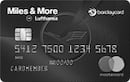
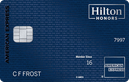
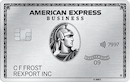
Learn more about the best credit cards for lounge access.
How to Choose an International Travel Credit Card
To choose the best international credit card for your needs, first start by excluding any credit cards that charge foreign transaction fees. You might also want to eliminate cards that are not on the Visa or Mastercard network, since other networks’ acceptance isn’t as reliable internationally. Next, compare the cards’ rewards to determine which offers suit your spending habits the best and estimate how much you’re likely to earn with each. Finally, subtract any annual fees from your estimated rewards and select the card that figures to save you the most overall.
Learn more about who should get an international credit card and how to pick the best travel credit card.
How to Use a Credit Card Internationally
- Make sure you have a Visa or a Mastercard.
Visa and Mastercard are the most widely accepted types of credit cards and automatically provide inexpensive currency conversion, so bringing one is a wise move, whether you make it your main payment method or just have it as a backup. Credit cards on other networks may not work everywhere you go.
- Take the opportunity to earn lots of rewards.
The best travel credit cards can provide enough rewards to pay for your whole trip, or at least subsidize the expense significantly. For example, putting an international trip on a new card is a great way to meet the spending requirement for an initial bonus. That can easily get you more than $700.
- Avoid foreign transaction fees.
Only using credit cards without foreign transaction fees when traveling abroad is essential. Otherwise, you’ll spend around 3% more than necessary, which could add up to quite a lot on a big trip.
- Stick to manned checkout stations.
Unmanned payment terminals, like you might find in a parking garage or train station, may not accept your credit card unless you have a chip-and-PIN card. On the other hand, any major U.S. credit card should work abroad if you can interact with a person.
- Pay in the local currency.
It can be difficult to tell the true cost of things when you’re abroad and dealing with a foreign currency, and merchants have been known to offer a quick conversion to dollars. This might seem like a kind gesture, but it’s often a ploy to use a high exchange rate and pocket some extra money courtesy of an unsuspecting tourist. This is called dynami currency conversion.
- Don’t use the ATM.
Unless it’s a real emergency, avoid using your credit card to withdraw cash from an ATM while abroad. Doing so is known as a cash advance and will be very expensive. You’ll have to deal with an ATM-owner surcharge, plus a high credit card fee and APR. Instead, you should bring a debit card with no foreign fees in order to withdraw cash when you need it.
- Know what benefits you’re entitled to.
International credit cards often come with secondary benefits such as travel accident insurance, lost/delayed baggage insurance, emergency medical services and more. Knowing what’s available to you before you leave for your trip will make any issues that come up a lot easier to handle. On that note, your credit card’s guide to benefits includes some important contact information that you may need. Writing that information down somewhere could come in handy, especially if you don’t have reliable internet access.